Various Thin Line Icons Vector Set Colle: A Practical Evaluation for Designers and Developers
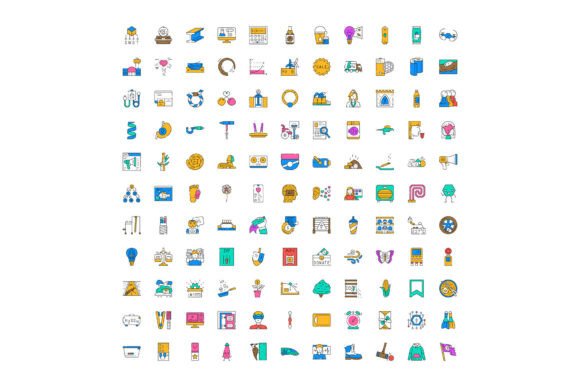
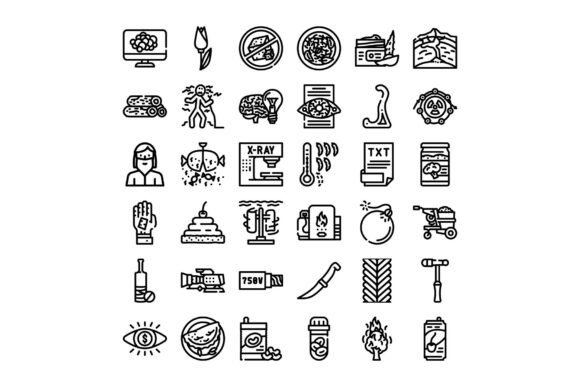
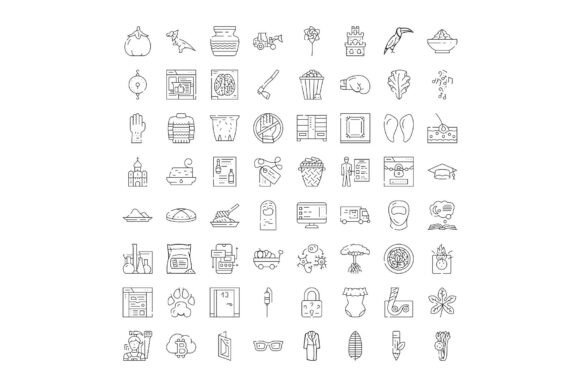
The Various Thin Line Icons Vector Set Colle is a curated collection of minimalist, outline-style pictograms delivered in scalable vector format. It includes icons spanning business, technology, travel, food, health, education, finance, weather, and everyday lifestyle categories. Designed with UI, web interfaces, dashboards, infographics, and presentation materials in mind, the set emphasizes consistency in stroke weight, spacing, and visual rhythm—key traits for cohesive digital experiences.
Unlike monolithic icon libraries or single-purpose packs, Various Thin Line Icons Vector Set Colle positions itself as a focused, intentionally limited selection. It does not aim to cover every possible concept but instead offers a thoughtfully balanced subset—typically 200–400 icons—that avoids redundancy while supporting common interface needs. All assets are provided in SVG format, with optional EPS or AI files depending on the licensing tier, enabling direct use in code or editing in vector applications.
Why Designers and Product Teams Consider This Collection
Designers evaluating icon resources often prioritize three interrelated factors: visual coherence, technical flexibility, and implementation efficiency. The Various Thin Line Icons Vector Set Colle addresses these by delivering a uniform line-weight aesthetic (usually 1.5–2 px at standard 24×24 size), consistent corner radii, and aligned baselines across all glyphs. This reduces the need for manual adjustments when integrating icons into responsive layouts or design systems.
Developers benefit from clean, optimized SVG output—minimal embedded metadata, no unnecessary groups or hidden layers, and semantic naming conventions where applicable. That makes it easier to inline icons directly in HTML, apply CSS transforms or color overrides, or bundle them efficiently via icon fonts or sprite sheets.
For teams maintaining branded UIs, the set’s minimalism supports adaptability: icons can be recolored to match brand palettes without visual distortion, and their thin-line nature ensures legibility at small sizes—especially important for mobile navigation bars or data-dense dashboards.
Practical Benefits and Realistic Tradeoffs
One clear advantage of Various Thin Line Icons Vector Set Colle is its predictability. Because it is a finite, hand-crafted set—not algorithmically generated or scraped from multiple contributors—it avoids inconsistencies common in larger free libraries: mismatched proportions, irregular padding, or ambiguous metaphors. Users report faster onboarding during design handoff and fewer iterations when developers implement icons alongside text labels or interactive elements.
However, this strength introduces a tradeoff: scope limitation. While the collection covers broad domains, it may lack niche or emerging concepts—for example, specific SaaS features like “AI prompt history,” “blockchain node status,” or “carbon footprint tracker.” Similarly, cultural or regional symbols (e.g., localized payment methods or accessibility variants) are typically absent unless explicitly included in the published version.
Another consideration is licensing. Most versions of Various Thin Line Icons Vector Set Colle operate under a perpetual, royalty-free license for commercial use—but usage rights for SaaS platforms, white-labeled products, or embedded hardware interfaces vary by vendor. Users should verify whether redistribution or automated generation (e.g., dynamic icon assembly in a builder tool) falls within permitted terms.
When This Collection Fits Well
Various Thin Line Icons Vector Set Colle tends to be a strong fit in several scenarios:
- Mid-stage product design: When a team has moved beyond wireframing and needs production-ready, stylistically unified icons for prototyping and development—but hasn’t yet built a custom icon system.
- Marketing and content teams: Creating infographics, blog illustrations, or social media assets where clarity, scalability, and brand-aligned simplicity matter more than exhaustive symbol coverage.
- Small-to-midsize development shops: Supporting multiple client projects with varying visual requirements, where reusing a consistent, well-documented icon set reduces design debt and speeds up delivery.
- Educational or internal tools: Dashboards for analytics, learning management systems, or HR portals—where functional recognition outweighs decorative flair, and thin-line aesthetics support clean information hierarchy.
When Alternatives May Be More Suitable
Teams should consider alternatives if any of the following apply:
- Need for real-time customization: If your workflow requires generating icons dynamically (e.g., combining base shapes with modifiers), a parametric icon system or code-based solution (like Lucide or Phosphor) may offer greater flexibility than a static vector pack.
- Strict accessibility or inclusivity requirements: While Various Thin Line Icons Vector Set Colle includes common representations, it doesn’t guarantee WCAG-compliant iconography—such as dual-coding (icon + text), sufficient contrast in monochrome use, or tested metaphor clarity across user groups. Dedicated accessibility-focused libraries or custom icon audits may be necessary.
- Highly specialized domains: For medical device interfaces, industrial control panels, or financial trading platforms, domain-specific icon standards (e.g., IEC 60417, ISO 7000) often supersede aesthetic considerations. In those cases, compliance—not minimalism—drives selection.
- Budget constraints with scale demands: Free, open-source icon sets (e.g., Heroicons, Tabler Icons) provide broader coverage at zero cost. Though they may require more curation to achieve visual unity, they’re viable when volume outweighs stylistic precision.
Making an Informed Decision
Evaluating Various Thin Line Icons Vector Set Colle isn’t about determining whether it’s “the best” icon set overall—it’s about assessing alignment with your current project constraints and long-term goals. Start by auditing your most-used icons: list the top 30–50 concepts needed across your UI, documentation, or marketing assets. Cross-reference that list against the official index (if available) or preview files. Pay attention not just to presence, but to visual treatment: Does the “user profile” icon match your mental model? Is the “notification bell” distinguishable at 16px?
Next, test technical integration. Import a handful of SVGs into your design tool and developer environment. Check how easily they scale, whether stroke alignment holds across viewboxes, and how CSS color inheritance behaves. These practical checks often reveal more than theoretical comparisons.
Finally, reflect on evolution. Will this set grow with your product—or will you outgrow it within six months? If your roadmap includes expanding into new feature areas or international markets, factor in whether the vendor updates the collection regularly, offers add-on packs, or provides customization support.
In summary, Various Thin Line Icons Vector Set Colle serves best as a reliable, focused foundation—not a forever solution. Its value lies in reducing early ambiguity and accelerating consistency, especially when time, design bandwidth, or technical resources are constrained. For teams prioritizing clarity, maintainability, and quiet visual confidence over maximal variety, it remains a pragmatic choice among modern icon resources.