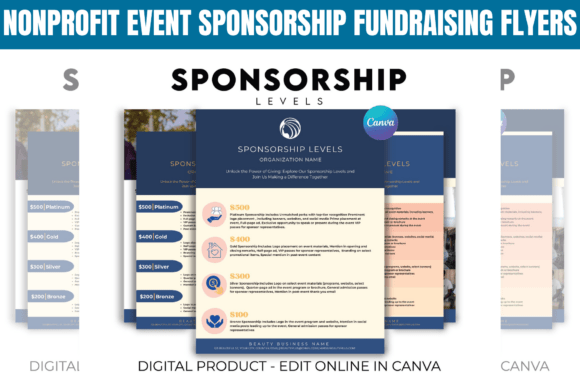
Nonprofit Event Sponsorship Fundraising
Nonprofit Event Sponsorship Fundraising is more than just asking businesses for money—it’s about building authentic, mutually beneficial partnerships that fuel your mission while giving sponsors meaningful visibility, community connection, and purpose-driven value. At its core, it’s a strategic approach where organizations invite local businesses, corporations, foundations, or individuals to support an event—like a gala, walkathon, art festival, or educational summit—in exchange for clearly defined benefits aligned with their goals.
This method works especially well when your event already has strong community resonance: think a neighborhood food drive with local restaurants stepping in as “Meal Match Sponsors,” or a youth coding camp where tech startups sponsor workshops and gain early access to emerging talent. It’s not about transactional exchanges; it’s about shared storytelling, credibility transfer, and real-world impact.
Where Nonprofit Event Sponsorship Fundraising Makes the Most Difference
Small arts collectives launching their first annual mural festival often struggle with production costs—but with thoughtful sponsorship levels (e.g., “Canvas Champion” for $1,500, “Brushstroke Benefactor” for $500), they turn local hardware stores, print shops, and cafes into active collaborators. The café doesn’t just write a check; it hosts a pre-festival meet-and-greet, features artist spotlights on its window decals, and gains genuine goodwill from residents who see them as culture enablers—not just coffee sellers.
Environmental nonprofits hosting river cleanups use sponsorship to scale outreach: a landscaping company covers gloves and grabbers, a bottled water brand supplies eco-refill stations, and a local bank funds volunteer T-shirts. In return, each partner receives branded signage at checkpoints, social media shoutouts, and inclusion in a post-event impact report shared with city council members. That’s not charity—it’s strategic alignment.
For faith-based organizations running back-to-school supply drives, sponsorship becomes relational infrastructure. A family-owned office supply store donates notebooks and pens—and gets invited to speak briefly at the distribution day. Parents remember that business. Teachers tag them in thank-you posts. The store sees increased foot traffic—not because of ads, but because they showed up meaningfully.
Who Benefits—and How
Small nonprofits with lean staffs benefit most from structure and clarity. Without dedicated development teams, a polished, editable Event Sponsorship Package eliminates guesswork. You’re not starting from blank slides or Word docs—you’re customizing proven messaging, tiered benefits, and visual hierarchy that communicates professionalism instantly.
First-time event planners gain confidence through consistency. Instead of improvising pitch emails or scrambling to design flyers last-minute, they work from a template that already groups benefits logically: logo placement, speaking opportunities, digital exposure, and experiential perks (like VIP seating or volunteer recognition). That consistency builds trust—both with sponsors and internal stakeholders.
Mid-sized nonprofits scaling their events use sponsorship tiers to diversify revenue. Rather than relying on one or two major donors, they activate 8–12 partners across levels like “Visionary,” “Innovator,” and “Community Champion”—each with distinct, scalable benefits. This spreads risk, deepens local roots, and creates natural renewal pathways year after year.
Real-World Considerations Before You Begin
Not every business wants—or should be asked—to sponsor your event. Start by mapping who already engages with your cause: Who follows you on Instagram? Who’s attended past events? Whose values visibly align with yours? A wellness nonprofit shouldn’t pitch a fast-food chain unless there’s a clear, honest bridge—like co-hosting a nutrition literacy workshop. Authenticity matters more than dollar amounts.
Timing is equally critical. Outreach too early feels vague (“We’re planning something… maybe next year?”); too late feels desperate (“Can you wire $2,000 by Thursday?”). Ideal outreach begins 4–6 months ahead for mid-size events—and includes a concise, visually grounded Donation Package that answers three questions immediately: What are we doing? Why does it matter? What do you gain?
Also consider capacity. Can your team deliver on promised benefits? If you offer social media features, do you have someone to post consistently? If you promise booth space, do you have floor plans and logistics ready? Overpromising damages credibility faster than under-delivering. That’s why customizable templates help: they include realistic, field-tested benefit language—not aspirational fluff.
Why Editable Flyers and Infographics Change the Game
A static PDF flyer rarely moves the needle. But an editable infographic seeking sponsorship—designed for quick tweaks to colors, fonts, logos, and localized stats—lets you speak directly to each prospect. Imagine sending a version to a regional credit union with their branding subtly echoed in the palette, key stats pulled from your city’s financial inclusion report, and a benefit line like “Position your institution as a trusted partner in economic resilience.” That level of personalization isn’t possible without flexible, professional-grade assets.
Similarly, Non Profit Sponsor Levels aren’t just price tags—they’re relationship roadmaps. A well-designed tier system shows intentionality: lower tiers emphasize community presence (e.g., logo on digital event guide), mid-tiers add engagement (e.g., branded giveaway item + 2 tickets), and top tiers offer influence (e.g., naming rights to a session or co-branded press release). When sponsors see their investment reflected in tangible, differentiated value—not just a “thank you”—they’re far more likely to renew.
Strengths—and Honest Limitations
The biggest strength of Nonprofit Event Sponsorship Fundraising is sustainability. Unlike one-off grants or individual donations, sponsorships often recur—especially when you steward relationships well. A restaurant that sponsored your summer concert series is likely to return for the fall harvest fair if you send photos of their banner in action, introduce them to attendees, and share how many meals their support helped serve.
But it’s not a magic fix. It requires relationship-building stamina—not just proposal drafting. It won’t replace foundational donor cultivation, nor does it work well for highly sensitive causes without careful partner vetting (e.g., mental health initiatives partnering with employers who prioritize psychological safety). And while editable templates streamline the process, they don’t substitute for follow-up calls, handwritten notes, or showing up at a sponsor’s grand opening.
Still, when grounded in respect, clarity, and shared purpose, Nonprofit Event Sponsorship Fundraising becomes one of the most human-centered revenue strategies available—where dollars flow not from obligation, but from alignment.