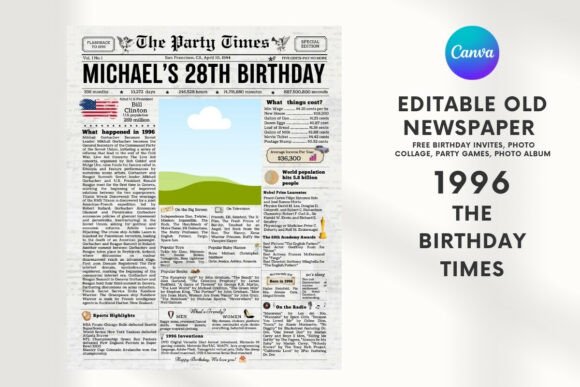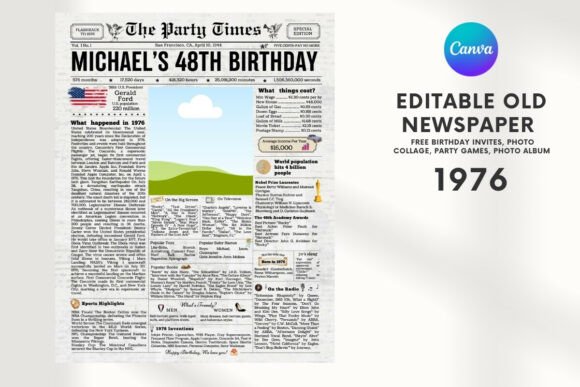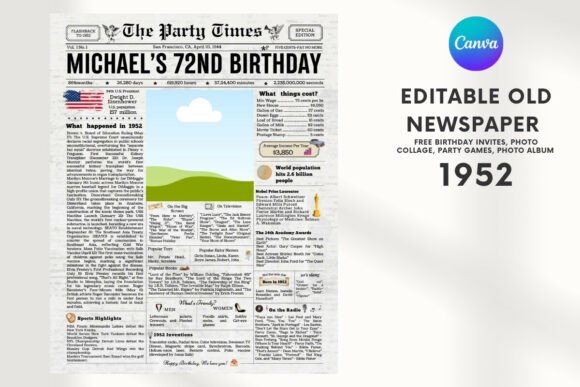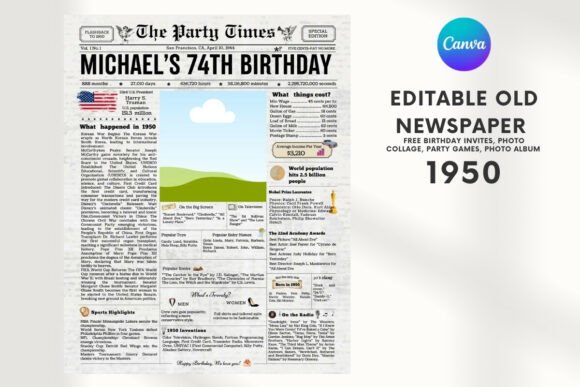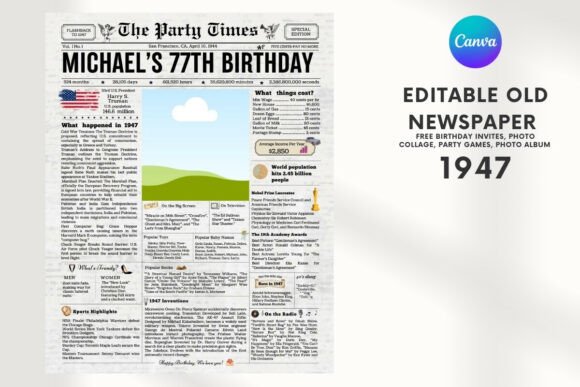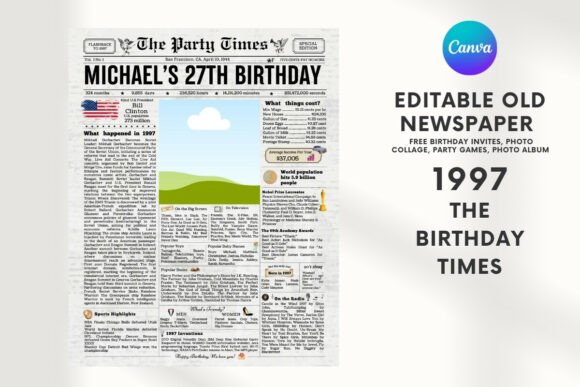
EDITABLE 1997 Birthday Vintage Newspaper
Imagine handing someone a newspaper dated the day they were born—complete with retro typography, sepia-toned accents, and headlines that tell *their* story. The EDITABLE 1997 Birthday Vintage Newspaper isn’t just a design—it’s a tactile, emotionally resonant storytelling tool built for real people who value meaning over mass production. Launched with Canva’s intuitive editor, it’s fully customizable: swap fonts, adjust layouts, insert photos, rewrite headlines, or even change the “date” to match any birthday year—not just 1997. That flexibility makes it equally powerful for a 25th birthday party, a 60th milestone, or a classroom project celebrating a student’s heritage.
More Than Nostalgia—A Framework for Personal Storytelling
What sets this template apart isn’t just its vintage aesthetic—it’s how thoughtfully it structures narrative. Each section invites intentionality: “Front Page Headlines” spotlight major life moments; “Local News” shares quirky habits or inside jokes; “Obituaries” (used playfully) honor childhood pets or beloved toys; “Weather Report” reflects mood or personality traits (“Sunny with bursts of sarcasm”). This scaffolding helps users avoid vague sentiment and instead anchor celebration in specificity—something audiences remember long after the cake is gone.
For educators, it’s a low-pressure way to teach biography, media literacy, or timeline construction. A middle school teacher might assign students to create their own “birth year newspaper,” researching pop culture, tech, and world events from 1997—but layering in personal milestones like first bike rides or family vacations. For marketers, it’s a standout lead magnet: offer a free editable version in exchange for email signups, then follow up with tips on personal branding through storytelling.
Creative Uses Across Audiences
Different goals demand different adaptations—and the EDITABLE 1997 Birthday Vintage Newspaper responds gracefully:
- Freelancers & designers: Use it as a client-facing mood board during onboarding—replace placeholder text with the client’s brand voice, values, and origin story. It becomes both a creative brief and a visual contract.
- Small business owners: Turn it into an anniversary edition for your company’s “birth year.” Feature founding team members as “staff reporters,” early customers as “community heroes,” and product launches as “breaking news.” Print copies for in-store displays or include digital versions in email newsletters.
- Hobbyists & families: Assemble one annually for a child’s birthday—each year adding new sections like “This Year in Sports” (little league highlights) or “Arts & Culture” (school plays, art projects). Stack them chronologically for a physical archive no app can replicate.
- Bloggers & content creators: Repurpose sections into social carousels—e.g., “5 Things You Didn’t Know About [Name]” pulled straight from the “Fun Facts” column. Keep consistency by reusing the same headline font and color palette across platforms.
Keeping It Clear, Consistent, and Human-Centered
Customization is powerful—but without guardrails, it can dilute impact. Here’s how to stay focused:
- Start with structure, not decoration. Fill all core sections *first*—even with rough notes—before adjusting colors or adding graphics. Clarity precedes polish.
- Use real details, not filler. Instead of “Loves chocolate,” try “Eats chocolate chip cookies every Sunday at 3 p.m.—a ritual since age 7.” Specificity builds authenticity.
- Limit font swaps. Stick to two typefaces max: one serif for headlines (to reinforce vintage tone), one clean sans-serif for body text (for readability). Canva’s built-in pairing suggestions help here.
- Test print legibility. Some vintage textures reduce contrast. Preview in grayscale and adjust text opacity or background brightness before finalizing.
Avoid overloading the front page. Let the celebrant’s name dominate the masthead—not decorative flourishes. Save embellishments for secondary pages like “Classifieds” (where you list favorite books, songs, or recipes) or “TV Listings” (showing their go-to comfort movies).
From Digital File to Meaningful Artifact
The real magic happens when the file leaves the screen. Printing transforms it: use matte cardstock for a tactile, archival feel—or newsprint texture paper for full immersion. Fold it like a broadsheet, tie it with twine, and tuck in a handwritten note on the back page. At events, display it open on a stand beside framed photos from the same era. Guests naturally lean in, point, laugh—and connect.
For remote celebrations, share a PDF version with clickable links: embed a Spotify playlist in the “Entertainment” section, link to a Google Map showing childhood homes in “Local News,” or attach a short voice memo in the “Editorial” column. These small integrations make digital delivery feel just as intentional as print.
And because it’s editable, it scales with changing needs. A 30th birthday might emphasize career wins and friendships; a 70th could spotlight decades of community service and intergenerational stories. The template doesn’t prescribe tone—it supports it. You choose whether it’s witty, tender, irreverent, or reverent. The design stays steady so your voice takes center stage.
Why This Works—Beyond the Aesthetic
In a world saturated with templated greetings, the EDITABLE 1997 Birthday Vintage Newspaper stands out by honoring time—not as a number, but as a lived experience. It asks users to pause and reflect: What shaped this person? What deserves remembering? What feels true today?
That intentionality translates directly to audience resonance. Whether you’re designing for a client, teaching a class, or planning a surprise, the result feels less like a product and more like a shared act of attention. No AI can replicate the care behind selecting a photo of the celebrant’s first bike or writing a mock weather report titled “Partly Cloudy with Sudden Bursts of Joy.”
So download the template—not as a starting point for decoration, but as an invitation to listen closely, dig deeper, and celebrate in a way that lasts longer than the party. Because the best milestones aren’t marked by candles or confetti alone. They’re marked by being truly seen.